| description |
Jan-Wouter Zwart. 2014.
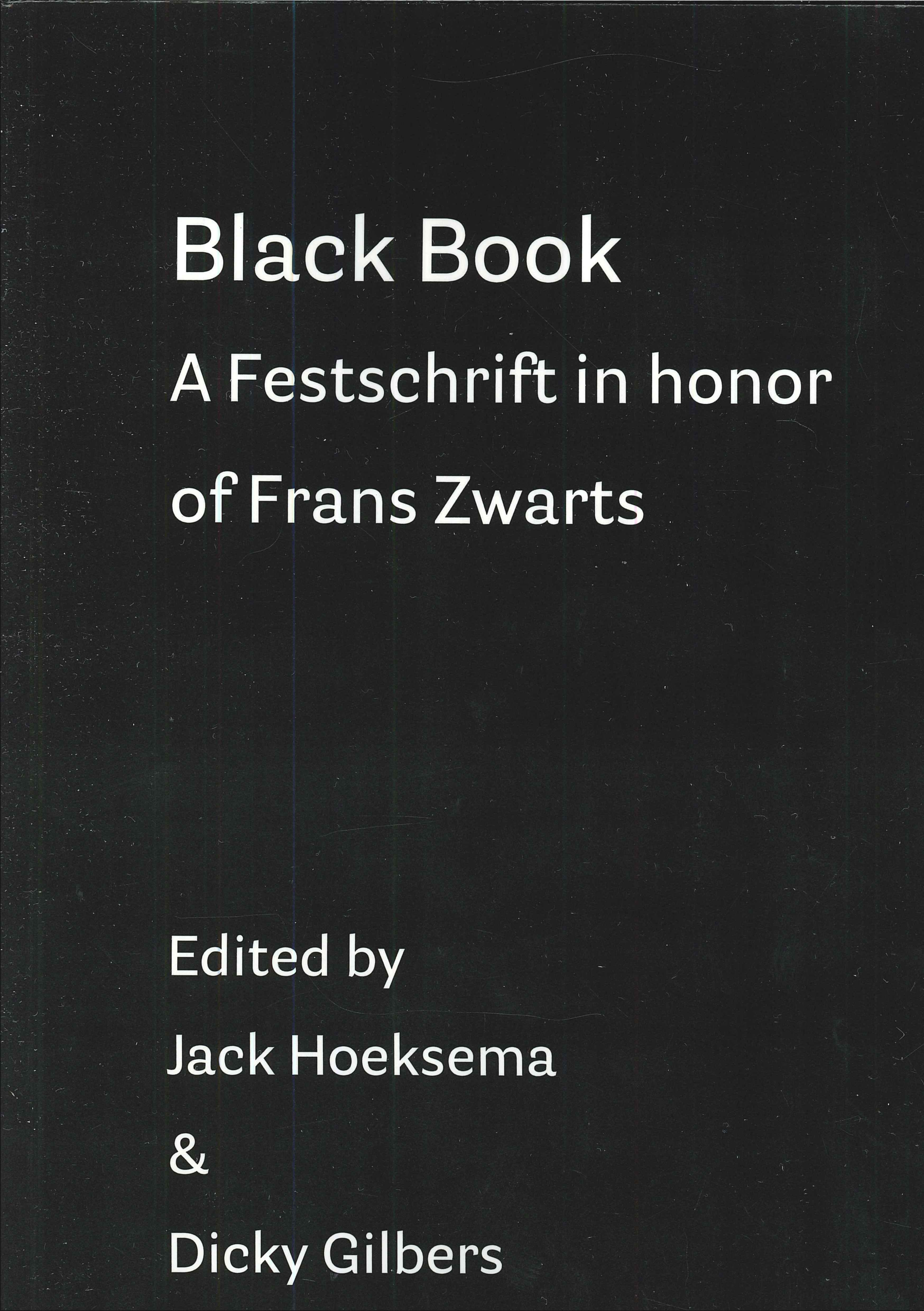
The tense of infinitives in Dutch. In Jack Hoeksema and Dicky Gilbers, eds.,
Black book: a Festschrift in honor of Frans Zwarts, p. 363-387. Groningen: University of Groningen. |
| type | Festschrift contribution. |
| ID | 2014b | 131 | first version February 15, 2007; touched up March 6, 2014 |
| origin | Paper presented at the TIN-dag, Utrecht, February 3, 2007. An expanded version was presented at the 22nd Comparative Germanic Syntax Workshop, Stuttgart, June 8, 2007, as a result of which the earlier paper remained unpublished. I was interested in defining finiteness, and found that it must be distinguished from tensedness. This is inspired by the dissertation research of Anna-Lena Wiklund (Umeå) and Janneke ter Beek (Groningen), with which I was involved at the time. A controversial result is that the so-called perfect tense in Dutch is a relative past tense, having nothing to do with aspect. |
| keywords | finiteness, tense, infinitives, aspect, perfect |
| summary | This article argues that the perfect infinitive in Dutch is used as the morphological realization of the tense feature [PAST] in nonfinite contexts. The argument is based on the distribution of the perfect infinitive compared with the perfect and the simple past in finite contexts. The observations lead to the conclusion that finiteness is not to be defined in terms of tense features. |
| related |
full text Presentations: TIN 02/2007; CGSW 06/2007 Unpublished material: CGSW 22 draft Publications: 133 |